
Why Austin HVAC Systems Are Especially Vulnerable to Mold
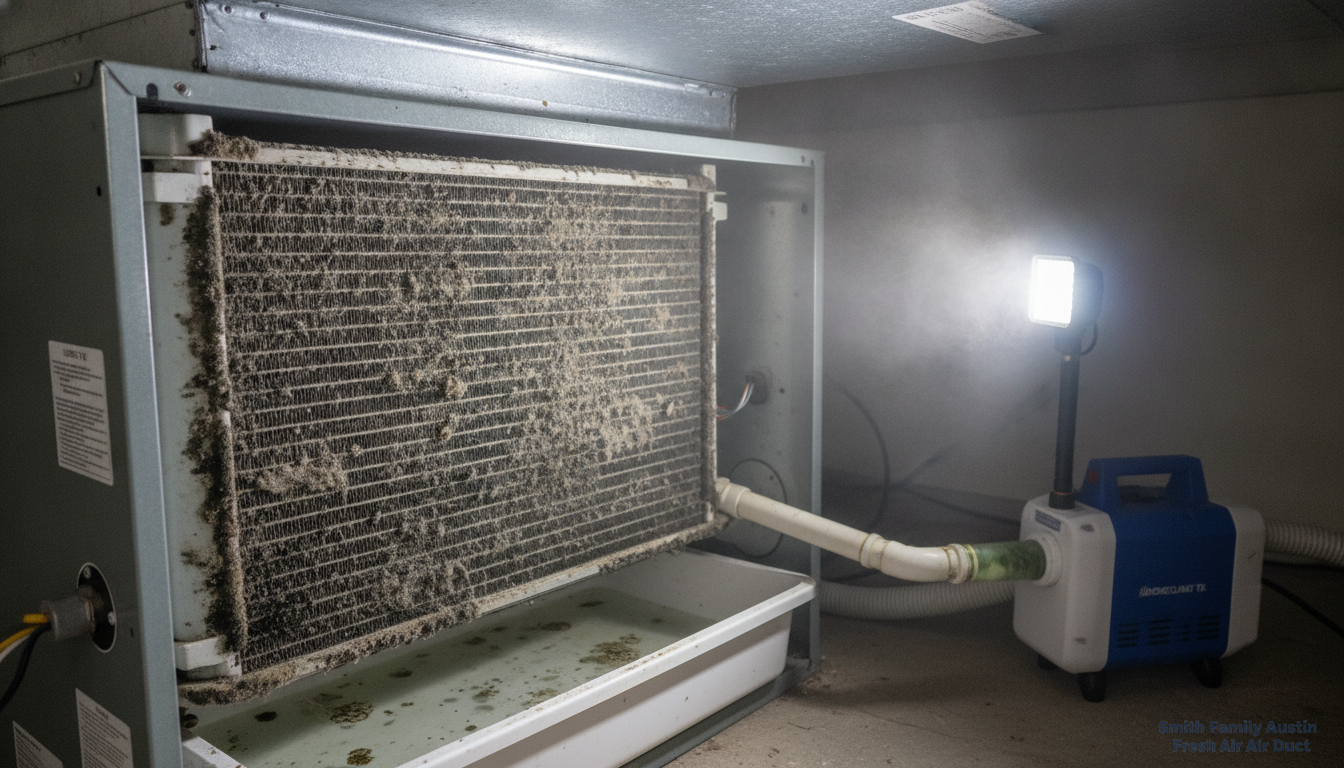
Mold needs three things to grow: moisture, organic material to feed on, and darkness. Your HVAC system provides all three in abundance, particularly in Austin's climate. The evaporator coil inside your air handler produces condensation constantly during cooling season, creating a wet surface that dust and organic debris stick to. Attic temperatures in Austin regularly exceed 120°F in summer, and the combination of heat and humidity inside flex ductwork creates conditions where biological growth can establish itself quickly.
The result: mold colonies that form on evaporator coils, inside drain pans, on the interior walls of supply ducts near the air handler, and at return air boots — then send spores into your living space every time the blower runs. For families in communities like West Lake Hills and Rollingwood with members who have asthma or allergies, this is a serious indoor air quality concern that deserves immediate attention.
Warning Signs of Mold in Your HVAC System
Mold inside an HVAC system is often invisible to homeowners because most of it grows in dark, enclosed duct interiors. However, several reliable warning signs indicate a problem:
- Musty or earthy odor when the system runs — This is the most common and recognizable sign. If your home smells musty only when the AC or heater is on, mold inside the ductwork or air handler is the likely culprit.
- Visible dark discoloration near registers or return grilles — Black, green, or grey staining around vent openings can indicate mold growth just inside the duct opening.
- Worsening allergy or asthma symptoms indoors — If occupants feel better when they leave the house and worse when they return, the indoor air quality is suspect.
- Water staining or standing water around the air handler — A sign of condensate drain problems that allow moisture to accumulate, fueling mold growth in the drain pan and nearby ductwork.
- Unexplained respiratory irritation with no seasonal trigger — Year-round symptoms that don't correlate with outdoor pollen seasons often point to an indoor source like moldy ductwork.
The Two-Step Solution: Duct Cleaning Followed by HVAC Sanitizing
Addressing mold in an HVAC system requires two distinct steps, and skipping either one leaves the problem partially unsolved.
Step 1: Professional Air Duct Cleaning
Our air duct cleaning service removes the bulk biological material — mold colonies, contaminated dust, and the organic debris that mold feeds on — from every supply and return duct run using negative-pressure source-removal equipment. Without this step, sanitizing solution applied to debris-laden duct walls cannot make adequate contact with the contaminated surfaces underneath.
Step 2: HVAC System Sanitizing
Following the cleaning, our HVAC system sanitizing service applies an EPA-registered antimicrobial fog throughout the entire duct system under the same negative-pressure conditions used during cleaning. The fine mist coats interior duct surfaces, the air handler coil area, and the drain pan, neutralizing residual mold spores, bacteria, and the volatile organic compounds (VOCs) those organisms produce — which are responsible for the musty odor. Occupants and pets can return to the treated space within one to two hours after treatment.
Don't Forget the Evaporator Coil and Drain Line
Mold's two favorite locations in any Austin HVAC system are the evaporator coil and the condensate drain pan — and both require direct attention beyond general duct cleaning.
Our evaporator coil cleaning service uses professional-grade no-rinse foaming coil cleaner to penetrate between aluminum fins, dissolve organic buildup, and restore the coil surface to a clean state that resists future mold adhesion. After coil cleaning, airflow improves measurably, cooling efficiency increases, and the coil no longer serves as a mold nursery circulating spores into your home.
Our condensate drain line cleaning service flushes and treats the drain line that removes the moisture produced by the coil. A clogged drain line allows water to back up into the drain pan, creating standing water that accelerates mold growth dramatically. We clear blockages with wet vacuum extraction and compressed air, then apply an algaecide treatment to inhibit future biological growth inside the line.
After Treatment: Preventing Mold From Returning
Professional cleaning and sanitizing eliminate the current mold problem, but maintaining good habits prevents recurrence in Austin's challenging climate:
- Change your air filter every 30 to 60 days during peak cooling season, using a filter rated MERV 8 or higher to capture more biological particles.
- Schedule annual condensate drain line cleaning each spring before cooling season begins.
- Keep indoor humidity levels below 60 percent using your thermostat's fan settings or a supplemental dehumidifier if needed.
- Schedule air duct cleaning every three to five years, or sooner after any water intrusion event near the ductwork.
- Have your evaporator coil inspected during annual HVAC maintenance visits.
Serving Austin Homeowners Who Need Mold Solutions Now
Smith Family Austin Fresh Air Duct provides complete HVAC mold remediation services across Austin and surrounding communities, including South Congress, Mueller, Sunset Valley, and all of Travis County. We're available seven days a week from 8:00 AM to 6:00 PM.
If you're noticing musty odors, allergy flare-ups, or visible discoloration near your vents, don't wait — call us at (737) 234-9111 or email [email protected] to schedule a same-week inspection and cleaning appointment. Our technicians will show you exactly what's inside your system before and after treatment so you can see the difference yourself.
Discuss This With Our Team
Call +17372349111 or fill out our online form for a free, no-obligation quote.
Request Free Quote